


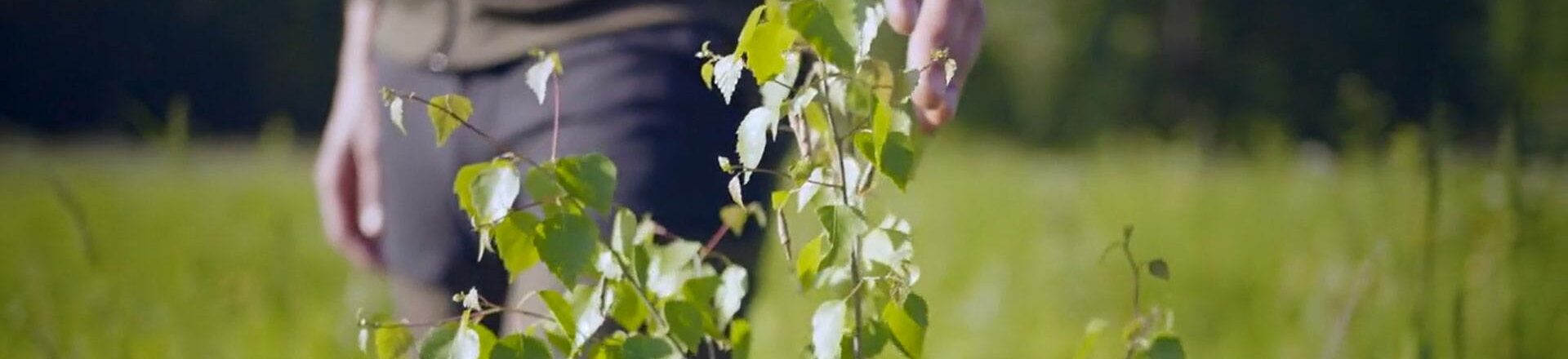
Restoring the Natural Forest Type – Hill Forest with Sessile Oak and Pedunculate Oak
In the coming period, Ingka Investments Romania will resume ecological restoration works aimed at re-establishing the natural forest type in management compartments 37 and 38 of Production Unit XVIII Adâncata, Suceava County. These sites have been owned by Ingka Investments since 2015.
The works involve the gradual harvesting of most of the existing mature trees in strips of up to 3 hectares, followed by the establishment of a new forest generation that reflects the natural forest type specific to this habitat. Within and around each strip, seed trees and trees important for biodiversity will be retained.
Immediately after the intervention, the treated areas will appear as open spaces. For this reason, we believe it is important to explain, before the works begin, why these interventions are necessary, what has been achieved so far, and how the new forest will be managed in the coming years.
Why the Intervention Is Necessary
Forests are not static ecosystems. They change over time under the influence of both natural factors and human activities, and sometimes their development moves them away from their natural structure and functions.
The forests that make up Production Unit XVIII Adâncata are located near several rural communities. Excessive grazing, certain historical forestry practices, and especially the lack of tending operations during the early development stages of the stands have influenced the current forest composition.
The stand where we will intervene is approximately 90 years old. Due to the absence of the necessary tending operations during its early development, species that regenerate and occupy the site more easily, particularly hornbeam and European aspen, have gradually gained dominance over oak and sessile oak.
Today, hornbeam and European aspen together account for approximately 55% of the standing timber volume, while oak represents less than 20%. The remainder of the stand consists of species such as linden, wild cherry, field maple, and manna ash. Some of these trees are approaching the biological age limit typical for their species, and both the vitality and stability of the stand are declining.
The forest management plan classifies this stand as “completely derived”, meaning that its composition differs so significantly from the natural forest type that it can no longer be restored through conventional tending operations or the gradual removal of selected trees.
Hornbeam and European aspen are native species and contribute positively to forest biodiversity. The issue is not their presence, but their excessive proportion, which has gradually reduced the share of oak and sessile oak. Due to their longevity, size, and the diversity of microhabitats they create, oaks play a distinct ecological role. Increasing their proportion within a balanced mixture of native species will restore the natural forest type characteristic of the area and create a more diverse and resilient forest stand.
What Has Been Achieved So Far
Of the 457 hectares of forest at Adâncata, 139.8 hectares, more than 30% of the total area, have already been restored. These areas include former spruce plantations established in the 1970s outside the species’ natural range and later affected by dieback, as well as stands whose composition had been altered by past management practices.
Most of these restored areas have already reached the young stand stage, meaning that the young trees have grown sufficiently and their crowns have begun to close, once again forming a continuous forest cover.
Within management compartments 37 and 38, we have so far completed four restoration strips of 3 hectares each, totaling 12 hectares. The results of the annual monitoring carried out in October 2025 show:
- an average regeneration success rate of 91%;
- individual results ranging between 80% and 105% of the planned density;
- an average proportion of approximately 79% oak species;
- an average seedling height of approximately 0.9 metres;
- good growth and health conditions across all four restoration areas.
A result of 105% means that one of the monitored areas contained more viable seedlings than originally planned. In addition to oak species, the new forest includes beech, maple, cherry, and ash, ensuring a diverse species composition.
What Comes Next
We will continue the restoration works gradually, in strips of up to 3 hectares. Within each strip, mature oak and sessile oak trees, seed trees, and trees important for biodiversity will be retained.
Following harvesting, we will plant oak species together with other native tree species, protect valuable natural regeneration, and carry out annual replanting and tending operations until the new generation develops into a fully established forest stand. We estimate that these works will continue over the next five years and will involve continuous monitoring of the development of the restored stands.
Considering the dominant species currently present, particularly hornbeam and European aspen, and the relatively low timber quality of many trees, most of the harvested wood will be marketed locally as firewood.